|
As part of its Critical Infrastructure Reentry and Situational Awareness Project (CIRSAP), the CRDR held a workshop on September 4, 2019 in Salem, Oregon. Over 80 public and private sector stakeholders from Oregon and around the region participated in the workshop focused on Unmanned Aircraft Systems (UAS), or drones. The workshop sought to highlight the current state of UAS usage within the State of Oregon and identify opportunities to collaborate more effectively between the public and private sector on drone usage and utilizing drones for situational awareness. The workshop brought together attendees and speakers from drone companies, industry associations and organizations, first responders, law enforcement, state and federal agencies, municipalities, emergency managers, and stakeholders from both the public and private sector.
The workshop was funded by a grant from the Department of Homeland Security’s (DHS) National Infrastructure Protection Plan (NIPP) Challenge Grant program. Oregon is one of four states that participated in the CRDR's Resilience Challenge Grant project. Learn more about the CRDR's Resilience Challenge Grant project here.
0 Comments
On August 28, 2019, the Center for Regional Disaster Resilience (CRDR), and the Montana Division of Disaster and Emergency Services held a statewide event in Helena, Montana. Fifty stakeholders gathered from emergency management, precision agriculture, transportation infrastructure, forest management, and other public and private sectors. The half-day workshop focused on Unmanned Aircraft Systems (UAS) situational awareness and featured presentations from drone manufacturers, experts and pilots from private companies, academia, and the State of Montana government. The purpose of the workshop was to educate stakeholders on current UAS policy, understand the use of UAS in Montana, and discuss utilizing UAS for improved situational awareness.
The workshop was funded by a grant from the Department of Homeland Security’s (DHS) National Infrastructure Protection Plan (NIPP) Challenge Grant program. Montana is one of four states that participated in the CRDR's Resilience Challenge Grant project. Learn more about the CRDR's Resilience Challenge Grant project here. Over 100 public and private stakeholders from across Idaho gathered in Boise on June 5, 2019 for the first statewide workshop focused on utilizing Unmanned Aircraft Systems (UAS) for situational awareness. This effort brought together many sectors including law enforcement, emergency management, transportation, communications, emergency services, fire, search and rescue, and higher education research as well as private sector agriculture and infrastructure such as rail, communications, power, and utilities.
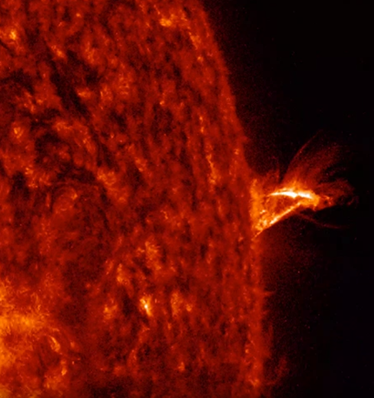
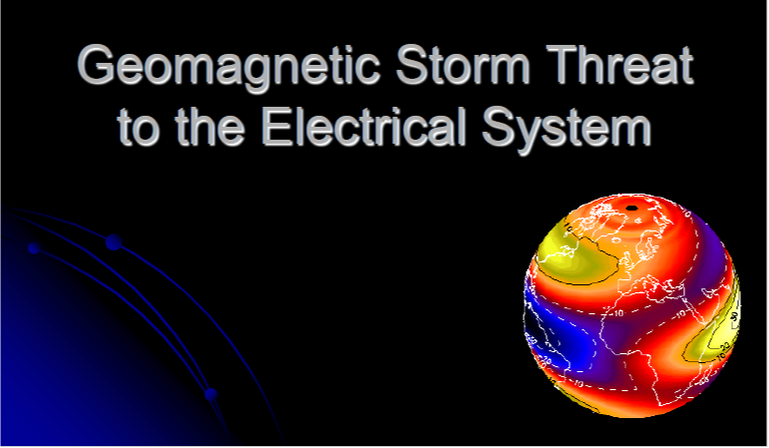
The workshop was funded by a grant from the Department of Homeland Security’s (DHS) National Infrastructure Protection Plan (NIPP) Challenge Grant program. Idaho is one of four states that participated in the CRDR's Resilience Challenge Grant project. Learn more about the CRDR's Resilience Challenge Grant project here. The Coronal Mass Ejection Long-term Power Outage workshop was held in Seattle, Washington on May 23, 2019. Funding was provided by the Washington State Homeland Security Region 6 Critical Infrastructure Working Group from the FFY 2017 State Homeland Security Program from the Department of Homeland Security via Washington State Military Department and King County Office of Emergency Management. It was designed as a full-day workshop that included speakers presenting information on the Coronal Mass Ejection (CME) hazard and warnings systems, impacts from regional power outages, current planning efforts and engagement of the audience in breakout discussions exploring how to address the hazard and mitigate potential impacts. This interdependencies workshop focused on a long-term electrical system blackout caused by a CME event striking North America. While most power outage planning revolves around other natural hazard events like windstorms, earthquakes, or terrorism, this exercise took a look at a long-term power outage with widespread impacts to urban, suburban, and rural communities. While concentrating on critical infrastructure, the human impacts to people and systems such as our healthcare institutions was also included in the workshop. Participants were briefed on the current planning the Washington State Department of Commerce Energy Office is conducting on fuel prioritization and hybrid electrical systems. The Washington State Emergency Management Division provided insight on the catastrophic planning conducted by the State to address a CME scenario. NOAA Space Weather Prediction Warning Center estimates a G5 Geomagnetic Storm will cause the following types of impacts:
Associated Materials
Public and private stakeholders from around the region met in Seattle, Washington on May 7, 2019 for a workshop to discuss the use of Unmanned Aerial Systems (UAS) improve situational awareness of critical infrastructure post-disaster. In attendance were participants from across many sectors including law enforcement, emergency management, transportation, communications, emergency services, fire, as well as private sector agriculture and infrastructure such as energy, communications, power, and utilities.
86% of the nation’s critical infrastructure is owned and operated by the private sector. Therefore, there is a need for rapid damage assessment of these critical infrastructures immediately following a disaster. Emerging drone technology is allowing for an expedited and detailed damage assessment of infrastructures by owners and operators. The private sector needs to access to disaster zones to conduct damage assessments and then be able to share information rapidly with state emergency management agencies so that a common operating picture can be established. The workshop was funded by a grant from the Department of Homeland Security’s (DHS) National Infrastructure Protection Plan (NIPP) Challenge Grant program. Washington is one of four states that participated in the CRDR's Resilience Challenge Grant project. Learn more about the CRDR's Resilience Challenge Grant project here. OverviewMore than 300 cybersecurity professionals, policymakers, and public and private sector members met in Boise for the 5th Annual Idaho Cybersecurity Interdependencies Summit. The Idaho Office of Emergency Management and the Pacific NorthWest Economic Region's Center for Regional Disaster Resilience collaborated to develop public/private sector partnerships for resilience in the state of Idaho through this multi-year series. The series has expanded cybersecurity capabilities of small business, government, and large industry throughout the state of Idaho. The 2019 Summit increased cybersecurity resilience through collaboration among all stakeholders. Participants heard from several key regional cybersecurity leaders, then participated in a cybersecurity focused court case enactment to better understand the implications of cybersecurity for infrastructure. View the Summit Agenda View the Summit Flyer
Speakers and Presentations
Court Case Enactment |
|
Charlton Evans, Founder and Principle Consultant
End State Solutions, LLC Charlton Evans has been a direct participant and contributor to the advancement of the aviation industry since he first began flying. Evans is an expert in UAS applications such as wildland fire, project management, global deployed worldwide operations, process development, program implementation, complex schedule management, functional support, resource management, resource allocation, process integration, aviation operations, unmanned air system, intelligence, surveillance, reconnaissance, tactics, techniques, procedures, DoD contracting, team building, workforce structure management, change management, corporate strategy, business capture, market analysis, cost mitigation, competitor assessment, and proposal development. Charlton has over 25 years of aviation experience; he earned his private pilot’s license when he was 18 years old. Charlton served in VMA-223 as an AV-8B Harrier Attack Pilot in the Marine Corps after graduating from the United States Naval Academy. Charlton holds instrument, commercial, and multi-engine civil ratings in addition to his military type ratings. |
David Fleckenstein, Director, Washington State Department of Transportation Aviation Division
David Fleckenstein is the Director of the Washington State Department of Transportation (WSDOT) Aviation Division. David has over 25 years of aviation experience stemming from his current position, his previous role as an airport director, and as an Army Aviation officer and pilot. The current work of WSDOT’s Aviation Division is focused on providing for airport infrastructure, addressing emerging aviation technology, and coordinating aviation emergency services with programs also supporting aircraft owner and dealer registration, airport infrastructure grants and loans, aviation planning, and management of the state owned/managed airports. David earned an undergraduate degree in political science from the University of South Carolina and master’s degrees in Adult Education from South Dakota State University and in Strategic Studies from the U.S. Army War College located in Carlisle, PA. |
Following the successful Disaster Resilience Symposium in Portland, Oregon, in 2017, the CRDR decided to organize another gathering of leaders and decision-makers from across the region to address common issues, examine solutions, and promote information-sharing. The Symposium was held as part of PNWER's 2018 Annual Summit in Spokane, Washington. Co-hosting the Disaster Resilience Symposium with the larger PNWER Summit provided attendees with the opportunity to interact face-to-face with elected officials and legislators and increased awareness for important disaster resilience issues. The 2018 Disaster Resilience Symposium consisted of two sessions: Election Infrastructure & Cybersecurity and Drones.
Election Infrastructure & Cybersecurity
Elections were designated as part of our nation's critical infrastructure in late 2016 by the Department of Homeland Security. The topic is both timely and relevant to our elected officials who will be in attendance at the PNWER Summit. The session will examine federal guidance for state and local election officials; current threats to election infrastructure; policies to protect election infrastructure; and methods to reassure the public.
Speakers:
Presentations:
Elections were designated as part of our nation's critical infrastructure in late 2016 by the Department of Homeland Security. The topic is both timely and relevant to our elected officials who will be in attendance at the PNWER Summit. The session will examine federal guidance for state and local election officials; current threats to election infrastructure; policies to protect election infrastructure; and methods to reassure the public.
Speakers:
- Eric Holdeman, Director, Center for Regional Disaster Resilience (CRDR)
- Patrick Massey, Regional Director, Office of Infrastructure, U.S. Department of Homeland Security
- Chad Houck, Deputy Secretary of State, Office of the Secretary of State, State of Idaho
- Julie Wise, Director, King County Department of Elections, Washington State
- Dave Matthews, Cyber Expert, Consultant
Presentations:
Drones
The Pacific Northwest Economic Region (PNWER) and its Center for Regional Disaster Resilience (CRDR) in partnership with Northeastern University’s Global Resilience Institute (GRI) have been awarded a 2017 National Infrastructure Protection Plan (NIPP) Security and Resilience Challenge grant for critical infrastructure. The project seeks to develop technologies for UAS (drone) employment to technically inspect critical infrastructure in post disaster scenarios.
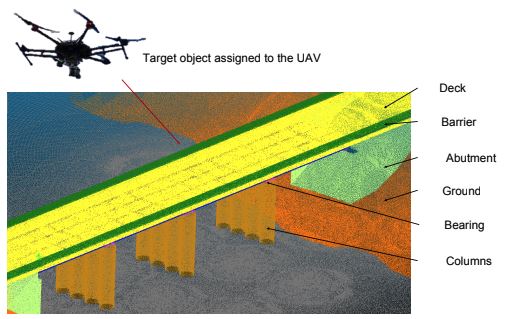
There is a need for rapid damage assessment of critical infrastructure immediately following a disaster. Emerging UAS technology is allowing for an expedited and detailed damage assessment of infrastructure such as bridges and other steel and concrete structures within the built environment.
Speakers:
Presentations:
The Pacific Northwest Economic Region (PNWER) and its Center for Regional Disaster Resilience (CRDR) in partnership with Northeastern University’s Global Resilience Institute (GRI) have been awarded a 2017 National Infrastructure Protection Plan (NIPP) Security and Resilience Challenge grant for critical infrastructure. The project seeks to develop technologies for UAS (drone) employment to technically inspect critical infrastructure in post disaster scenarios.
There is a need for rapid damage assessment of critical infrastructure immediately following a disaster. Emerging UAS technology is allowing for an expedited and detailed damage assessment of infrastructure such as bridges and other steel and concrete structures within the built environment.
- Current and Emerging Federal and State Policy
- Drones and UAS Impacts on Response and Recovery
- Private Sector Use of Drones for Critical Inspections
- Drones in Wildfire Response
- Privacy Considerations
Speakers:
- Robert Hodgeman, Senior Aviation Planner, Washington State Department of Transportation, Aviation Division
- James Yates, Emergency Manager Coordinator, Thurston County Emergency
Management - Taskin Padir, Associate Professor, Electrical and Computer Engineering, Northeastern University
- Greg Thies, News Operations Manager, King 5 News
- Tom Hagen, President, AUVSI Cascade Chapter
- Charlton Evans, Principal Consultant End State Solutions
- Jaethan Reichel, CEO, Lightship
- Evan Reis, Director, PE, SE, Executive Director, Co-Founder, U.S. Building Resiliency Council
Presentations:
- Robert Hodgman, Washington State Department of Transportation Presentation
- Charlton Evans, End State Solutions Presentation
- Taskin Padir, Northeastern University Presentation
- Jaethan Reichel, Lightship Presentation
- Evan Reis, U.S. Resiliency Council Presentation
- Tom Hagen, Enterprise Initiatives, Inc. Presentation